Hot afternoons in Needham feel different when your air conditioner hums rather than screams. For many homeowners, technicians arrive and fix what’s broken, then leave without much explanation. I want to lift the curtain on the people who actually show up for emergency calls, perform routine service, and design new systems. This piece centers on Green Energy AC Heating & Plumbing Repair and the local technicians who keep Needham comfortable — what they do well, where customers should pay attention, and how to get the best long-term value from AC repair in Needham MA.
Why local technicians matter
When an AC goes out the day before a heat wave, response time matters. Local technicians know Needham neighborhoods, city codes, and the practical realities of working in older colonial houses and newer condos. That familiarity shortens diagnosis time, and faster diagnosis lowers the risk of compressor damage, mold growth, and repeated callbacks. Green Energy AC Heating & Plumbing Repair has built a reputation locally by prioritizing quick dispatch, but speed alone is not enough. The technicians I’ve met pair urgency with a methodical approach: they verify system pressures, inspect airflow, and test electrical components rather than guessing from symptoms alone.
A technician’s toolbox tells a story. Proper temperature meters, gauge sets, and leak detection equipment are standard. What sets the best apart is using that equipment in a consistent workflow: listen to the system, measure, isolate, replace or repair the failing part, then test the full system under load. Technicians who skip steps tend to create repeat business for themselves — and frustration for homeowners.
Common AC problems and what technicians do
AC systems typically fail in predictable ways. Refrigerant leaks, failed capacitors, clogged coils, and compromised ductwork account for the bulk of service calls I’ve observed. For example, a family on Cliff Road had weak airflow for months before calling for AC repair in Needham MA. The first technician replaced the capacitor and billed a modest fee. The problem returned. When Green Energy dispatched a different technician, he found a partially blocked return grille and a collapsed flex duct in the attic. The initial capacitor replacement masked a deeper airflow issue. Once the ductwork was corrected and the filter cabinet sealed, the system cooled as intended and the capacitor never failed again.
Here are a few typical failure modes and the technician actions that actually fix them:
Refrigerant leaks: locate with electronic leak detector or soap test, repair or replace leaking component, evacuate and recharge system to manufacturer charge, measure superheat and subcooling. Electrical issues: test contactors, capacitors, and breakers, replace failed parts, inspect control wiring, and verify safe startup. Airflow problems: measure static pressure, inspect returns and supply registers, examine filters and coil cleanliness, correct collapsed ducts or insufficient return capacity. Compressor and motor failure: confirm locked rotor or poor lubrication, test amp draw against nameplate ratings, replace compressor or motor when repair is not economical. I share these examples so homeowners understand the trade-offs technicians face. Replacing a compressor on a 20-year-old system might be technically feasible, but choosing between a new compressor and a new system requires weighing remaining lifespan, efficiency, and refrigerant type.
Choosing between repair and replacement
When a technician assesses a failing air conditioner, the decision is rarely black or white. Consider a mid-2000s central AC that uses R-22 refrigerant. Even if a compressor can be found, R-22 costs and availability make replacement attractive versus repeated R-22 top-ups. On the other hand, a 10-year-old high-efficiency system with a modern refrigerant may justify a single major component repair if the rest of the system is in good shape.
Green Energy AC Heating & Plumbing Repair technicians typically present both options with estimates: immediate repair cost, expected additional costs within two to five years, and the incremental saving from a new system in energy bills. In my experience, the most useful estimate includes the cooling capacity of the current unit expressed in tons or BTUs, the SEER rating if available, and a projection of yearly savings for a given replacement with a modern high-efficiency system. Those hard numbers let a homeowner decide pragmatically.
What good service looks like on the job
Excellent technicians communicate. On a recent emergency call labeled emergency AC repair near me, a Green Energy technician arrived within hours, performed a prioritized list of checks, and then explained what mattered in plain language: the condenser fan motor had failed, the system had been running on high head pressure for months, and the outdoor coil was dangerously dirty. He replaced the fan motor, cleaned the coil, and demonstrated the before-and-after pressures to the homeowner. He also warned that the compressor was stressed and might fail within the next season. That https://www.facebook.com/greenenergymech/ frank assessment allowed the homeowner to schedule a replacement on their timeline, rather than being surprised by a breakdown during a heat wave.
Transparency extends to parts and labor. The best technicians provide itemized estimates, show the failed component when possible, and describe warranty terms. Green Energy AC Heating & Plumbing Repair typically offers warranties on parts and labor that align with industry standards, and their technicians will explain what voids a warranty, such as improper maintenance or owner modifications.
When to call for AC maintenance rather than repair
Preventive maintenance saves money over time. A well-executed annual maintenance visit typically includes cleaning or replacing filters, cleaning coils, checking refrigerant charge, testing electrical components, lubricating motors when necessary, and evaluating airflow. For many homes in Needham, a maintenance visit in spring prevents an emergency call in July.

If your system is older, annual maintenance can be a way to consistently monitor trendlines. A technician who records pressures, amp draws, and static pressures each visit builds a dataset that enables earlier, cheaper interventions. For example, gradual increases in head pressure over three visits often indicate a dirty condenser coil or low airflow rather than an imminent compressor failure. In homes with small children or pets, checkups are practical because debris and lint accelerate coil fouling.
A short checklist to ask during a maintenance visit
- Will you measure refrigerant pressures and report the readings? Do you inspect and clean the outdoor coil and condensate drain? Are electrical connections and capacitors tested under load? Do you check airflow and the condition of ductwork if accessible? What warranty do you provide on the service and parts?
That short list helps direct the conversation and ensures the technician performs meaningful diagnostics rather than a cursory cleaning.
Emergency calls, scheduling, and real-world response
Not every urgent problem needs the same response. A compressor that locks up requires immediate attention because it can cause fire hazards or further electrical damage. Slow cooling late at night is inconvenient, but may be scheduled for the next morning. Local technicians who specialize in AC repair in Needham MA tend to triage calls based on safety and potential collateral damage. Green Energy maintains an emergency dispatch protocol that prioritizes unsafe conditions and circumstances where lack of cooling threatens vulnerable people.
Expect realistic time windows. When a technician promises to arrive between 9 a.m. And noon, the real-world window often spans several hours. Clear communication works better than tight promises. Technicians that call when en route and estimate arrival times reduce frustration. If a homeowner needs special access instructions, those details should be given when the call is scheduled. In a handful of cases, delays are unavoidable because parts are not stocked locally. That is why some homeowners prefer to establish a relationship with a company like Green Energy so technicians are familiar with the home and can bring common spare parts.
Installation nuances and what installers watch for
AC installation in Needham requires both HVAC knowledge and practical site awareness. Proper sizing is crucial. A common mistake I have seen is oversizing based on square footage alone. Oversized systems cycle on and off too frequently, reducing dehumidification and increasing wear. A proper load calculation considers insulation, window orientation, occupant behavior, and duct losses. Green Energy technicians perform or review load calculations as part of installations, and they explain how they arrived at the recommended unit size.
Duct sealing and balancing often determine the real-world comfort more than the equipment itself. A new high-efficiency outdoor unit paired with leaky ducts will underperform and cost more to operate. Competitive installers will include duct testing or at least a thorough visual inspection. For homes with older duct systems, technicians might recommend a staged approach: seal and insulate ducts now, replace the air handler later, or vice versa, depending on budget and urgency.
A brief list of installation benefits to confirm with the installer
- properly sized equipment based on a manual J load calculation verified ductwork integrity and measured airflow correct refrigerant charge and factory-recommended startup tests manufacturer registration for warranty coverage post-installation explanation and demonstration to the homeowner
Financing, pricing transparency, and trade-offs
Cost conversations are uncomfortable but necessary. Expect reputable local shops to offer multiple options: a basic repair, a refurbished part if safe and available, and a full replacement. For larger projects, Green Energy offers financing options that spread payments over months or years. That can be the difference between a quick fix that raises bills and a planned upgrade that lowers operating costs.
When comparing estimates, ask for total installed cost, not just equipment price. Insist on seeing the SEER rating, the estimated heating and cooling capacity, and how the installer sized the unit. Beware of extremely low bids that omit essential steps like refrigerant verification or proper start-up testing. These shortcuts create recurring service calls and higher lifecycle costs.
How to spot clear evidence of quality
Technicians who care about craft leave a small paper trail: labeled thermostats, a written service report with measurements, and clear notes on any further recommendations. When a technician leaves a home, there should be no puddles, tools left behind, or new cosmetic damage. In several homes I’ve inspected after work, the difference between a good job and a quick job was in the details: properly routed condensate lines, a condensation pan with a float switch, and a tightened electrical panel cover.
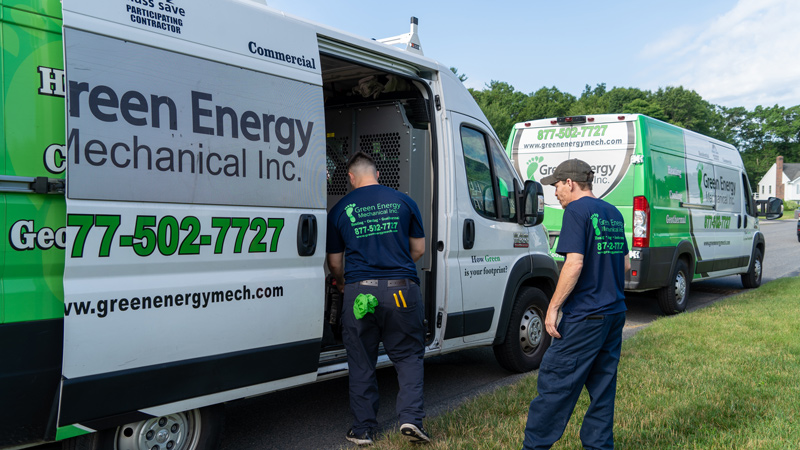
Green Energy AC Heating & Plumbing Repair emphasizes those details in their trainings. They require technicians to complete checklists and to register major installations with manufacturers. That administrative discipline translates to fewer warranty disputes and clearer expectations for homeowners.
What homeowners can do to extend system life
Preventive behavior matters. Replace filters regularly based on system design and household conditions. Keep condenser units free of vegetation and debris. Shade the outdoor unit if possible without restricting airflow. Ensure return grilles remain unobstructed and that attic insulation is not blocking ductwork. If you notice any unusual sounds, smells, or persistent high humidity indoors, call for a diagnostic. Small problems rarely fix themselves.
For homeowners eager to reduce energy costs, consider a programmable or smart thermostat, zoning if you have multiple levels, and attic insulation improvements. These investments often pay back faster than a marginally more efficient HVAC unit because they reduce overall building load.
Final thoughts on working with local teams
Choosing a local technician is not the same as choosing a brand name. Local teams like Green Energy AC Heating & Plumbing Repair bring advantages that national chains may not: local knowledge, quick response, and a vested interest in community reputation. They are also more likely to show up in snowstorms and heat waves because community relationships matter. That said, shop for competence and not only locality. Look for technicians who measure, explain, and leave a written record.
If you need AC repair in Needham MA, start by asking neighbors for recent referrals, check for online reviews that describe specific experiences, and ask for references on installations similar to yours. Call and ask the short checklist questions during scheduling so you know what to expect during the visit.
Needham’s climate rewards preparation. With the right local technicians, regular maintenance, and pragmatic decisions about repair versus replacement, households gain predictable comfort and lower lifecycle costs. Green Energy AC Heating & Plumbing Repair has become a familiar name in the area because their technicians prioritize clear diagnostics, honest recommendations, and reliable workmanship. If you call them or any other local provider, focus on the details: measured readings, documented work, and a technician who explains the trade-offs. That approach will save time, money, and the frustration of repeated service calls.
Green Energy AC Heating & Plumbing Repair
10 Oak St Unit 5, Needham, MA 02492
+1 (781) 776-9046
[email protected]
Website: https://greenenergymech.com